
ConcreteX Services — Sydney, NSW
Core Sampling
& Testing
The most definitive way to know what your concrete is made of. ConcreteX extracts core samples from your structure and submits them to a NATA-accredited laboratory for certified testing.
Definitive.
Certified.
In-Situ.
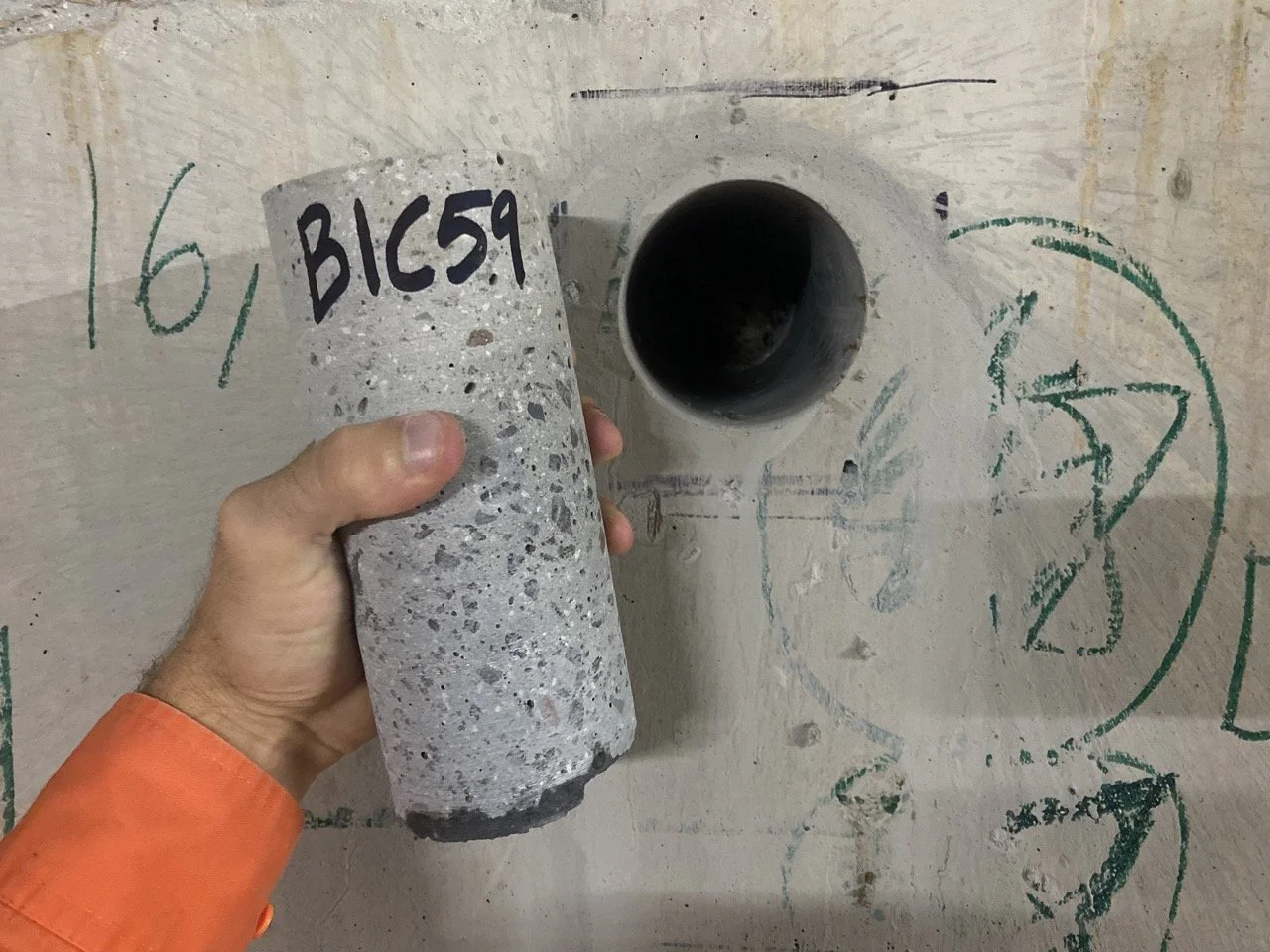
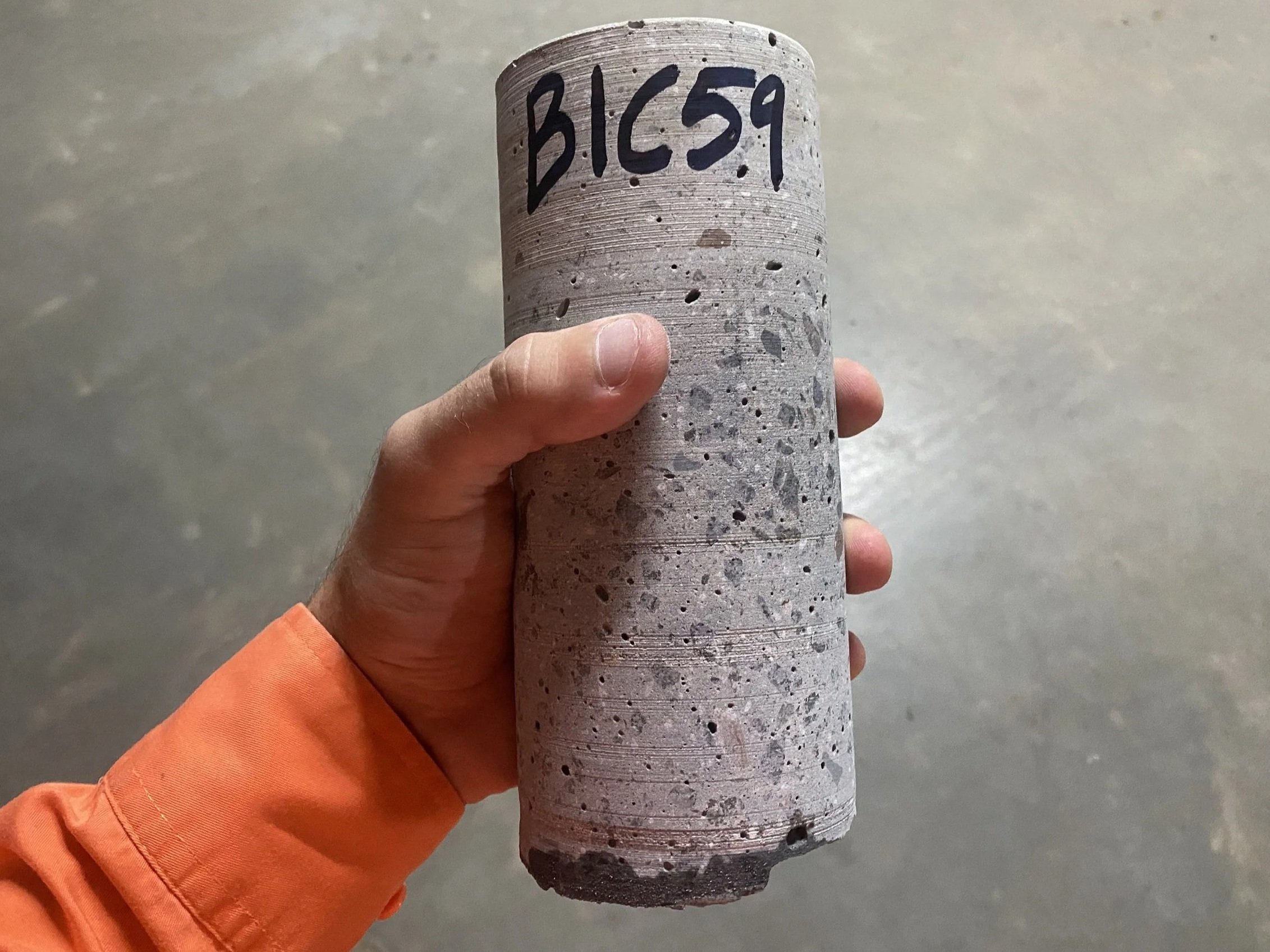
Core sampling involves extracting cylindrical specimens directly from your concrete structure and submitting them to a laboratory for testing. Unlike non-destructive methods, core testing gives you actual, measured material properties from the structure itself — not estimates or assumptions.
ConcreteX manages the entire process from start to finish — GPR scanning to confirm safe extraction points, controlled core extraction on site, labelling and photography, and prompt dispatch to our NATA-accredited laboratory partner for certified analysis.

NATA-Accredited Laboratory Testing
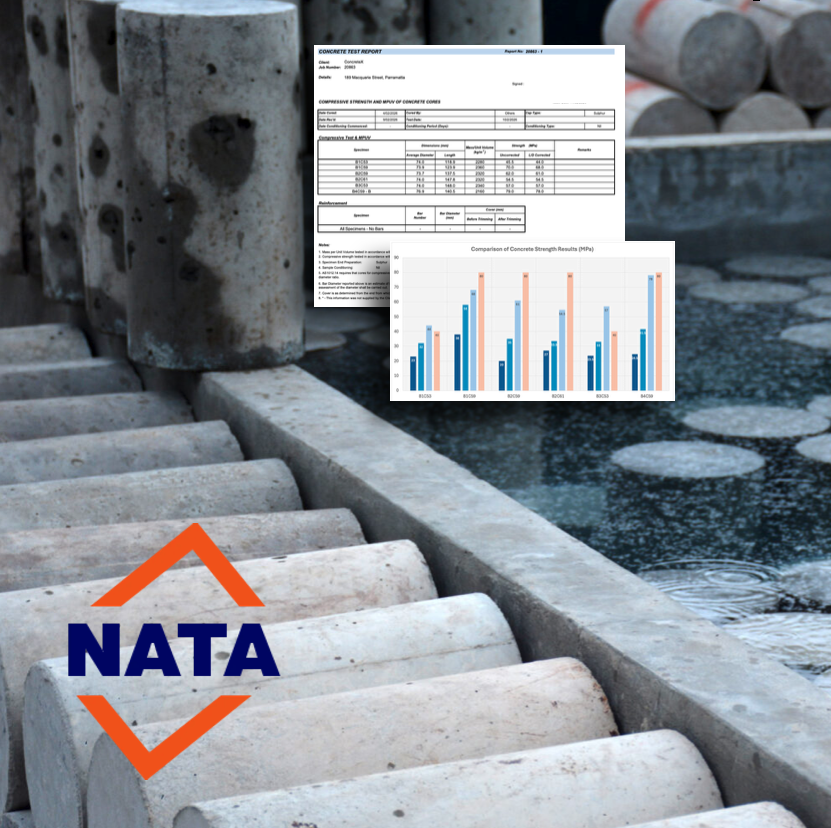
All core samples extracted by ConcreteX are tested at a NATA-accredited laboratory, ensuring results are certified, independently verified and legally defensible. NATA accreditation means the laboratory operates to internationally recognised quality standards — giving engineers, builders and asset owners complete confidence in the reported values.
Our Testing
Services
Compressive Strength
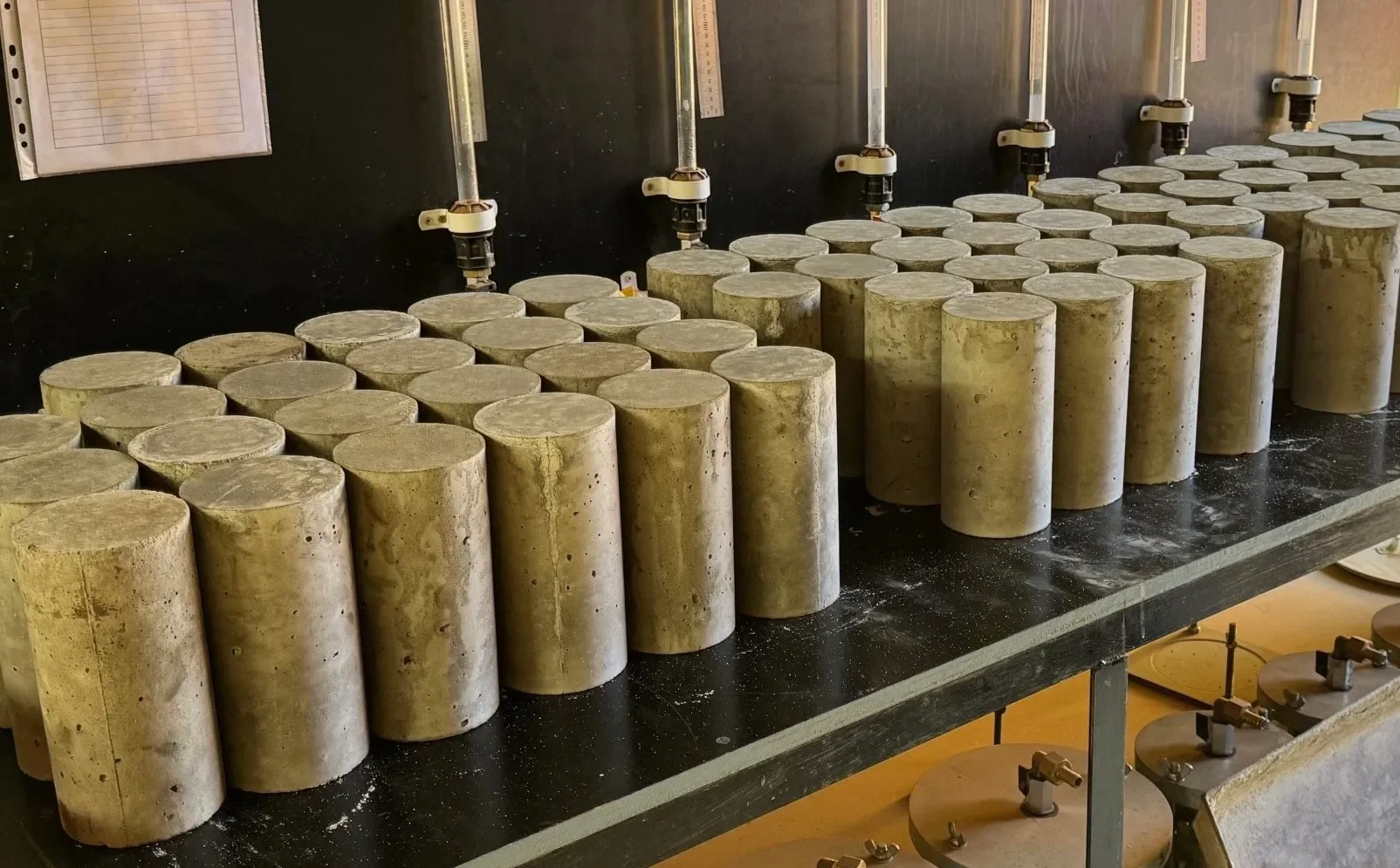
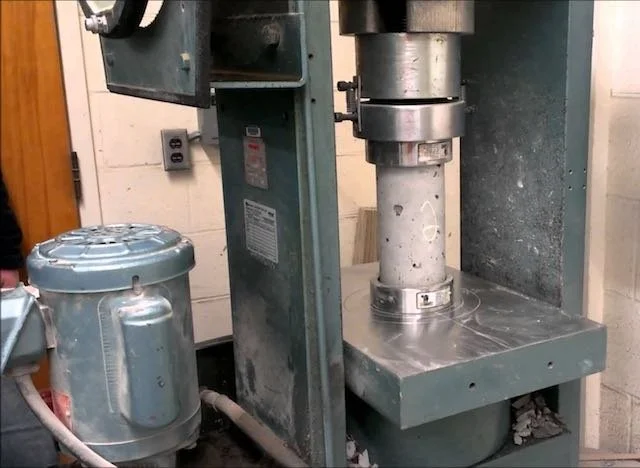
The most common test. Core specimens are crushed under calibrated loading equipment to determine the in-situ compressive strength of the concrete, reported in MPa.
AS 1012.9 & AS 1012.14Carbonation Depth
A phenolphthalein indicator solution is applied to the freshly cut core face to determine how far carbonation has progressed — a key indicator of corrosion risk to embedded reinforcement.
AS 3600 / AS 1478Chloride Content
Chloride ion testing determines the concentration of chlorides within the concrete at various depths — critical for structures in coastal or marine environments or those exposed to deicing salts.
AS 1012.20Petrographic Examination
A detailed microscopic examination of the concrete’s constituents — identifying aggregate type, cement content, air voids, cracking, contamination and signs of alkali-silica reaction (ASR).
ASTM C856Water-Cement Ratio
Analysis of the water-to-cement ratio of the extracted concrete — an indicator of concrete quality, permeability and long-term durability performance.
AS 1012 SeriesCover Depth Confirmation
The extracted core itself can confirm the actual cover depth to reinforcement — providing physical verification to complement GPR and Profoscope cover readings.
AS 3600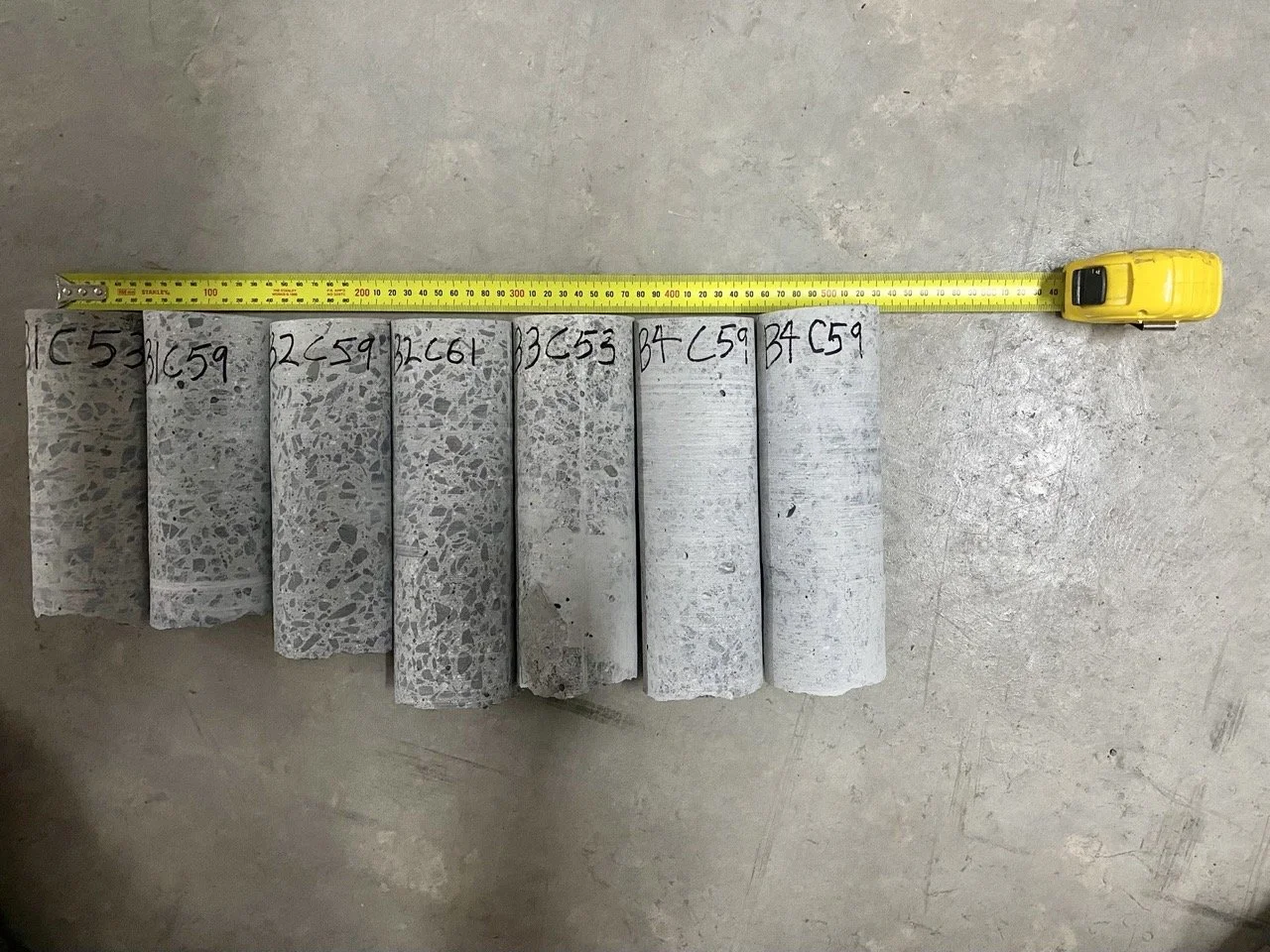
From Site
to Lab to Report
Review & Planning
We review available drawings, discuss testing objectives with the project engineer and identify suitable core locations to achieve representative results.
GPR Scan
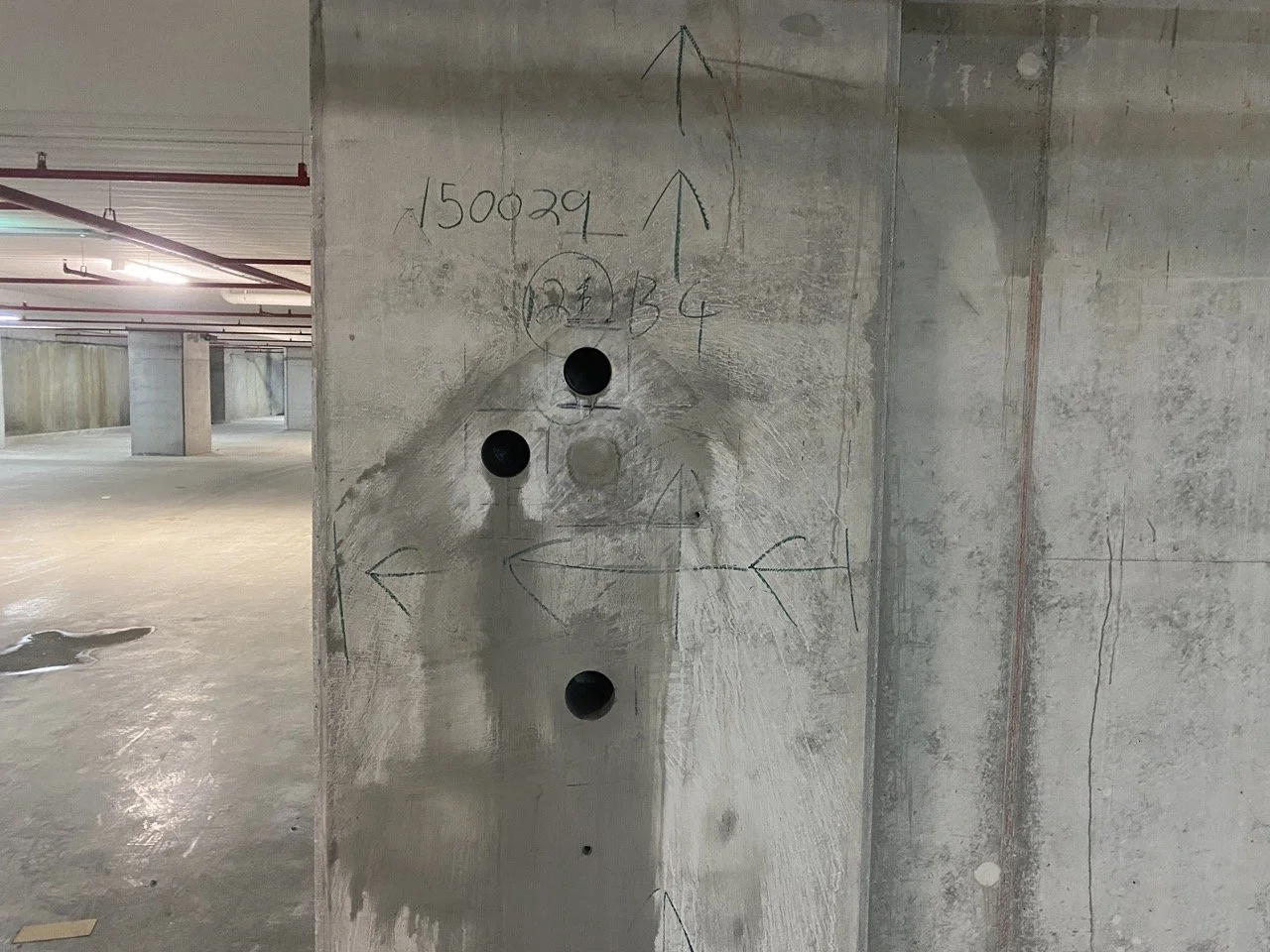
Every target core location is scanned with GPR before drilling begins — confirming the position avoids reinforcement, PT cables and conduits.
Core Extraction
Cores are extracted on site using diamond-tipped core drilling equipment. Each core is labelled, photographed and carefully packaged for transport.
Lab Submission
Samples are dispatched promptly to our NATA-accredited laboratory partner for the agreed testing programme.
Certified Report
A structured report is delivered documenting scan findings, core locations, photos and all certified laboratory test results — ready for engineering review.
Common
Situations
Existing Structure Assessments
When the in-situ strength of an existing slab, column or beam needs to be verified — particularly for older buildings where original documentation is incomplete, unreliable or unavailable.
Change of Use or Load Upgrades
Before increasing floor loads or changing the occupancy of a building, engineers need verified concrete strength data to confirm the existing structure can accommodate the new demands.
Remedial Investigations
Part of a broader structural investigation programme — alongside GPR scanning, cover measurement and Schmidt Hammer testing — to characterise the concrete in a deteriorating or damaged structure.
Compliance & Certification
Where engineering specifications, council requirements or insurance obligations require certified documentation of concrete properties for a specific structure or element.
Corrosion & Durability Assessment
Carbonation depth and chloride content testing to determine the risk of reinforcement corrosion — informing repair strategies and service life predictions for concrete structures.
Construction Quality Verification
Post-construction verification that in-situ concrete has achieved the specified design strength — particularly where cylinder test results are in question or were not taken at time of pour.
Frequently
Asked
Is core testing destructive?
Yes — core testing requires removing material from the structure, leaving a cylindrical hole. Core holes are typically patched after extraction. The number and location of cores should be determined in consultation with your structural engineer to minimise impact while obtaining representative data.
How many cores are needed?
This depends on the size of the element being assessed, the purpose of testing and the confidence level required. ConcreteX works closely with the project engineer to determine the appropriate sample size for statistically meaningful results per AS 1012.
Do you scan before coring?
Always. Every core location is scanned with GPR before drilling begins to confirm the position avoids reinforcement, post-tension cables and any other embedded objects. This protects both the structure and the safety of those on site.
How long do results take?
Core extraction is typically completed in a single site visit. Laboratory turnaround depends on the testing programme and laboratory workload — standard results are usually available within 5–10 business days. Expedited testing can be arranged where required.
What does the report include?
Our reports include scan findings, core location photographs, core labelling records, and the full NATA-accredited laboratory test certificate with results. Reports are structured for direct use by structural engineers and project teams.
Can you combine this with other services?
Absolutely. Core sampling and testing is frequently combined with GPR scanning, cover measurement (Profoscope), Schmidt Hammer testing and carbonation surveys as part of a full structural investigation. Talk to us about bundling services for your project.
Need Core Sampling
& Testing?
Talk to our team today — we’ll advise on the right number of cores, test types and turnaround for your project.