
ConcreteX Services — Sydney, NSW
Structural
Investigations
Expert non-destructive and minimally invasive testing to understand exactly what’s inside your concrete structure — reinforcement layout, cover, depth, strength and more.
What Is a
Structural
Investigation?
A structural investigation helps you understand the properties and condition of your existing concrete structure — without tearing it apart. Whether you’re planning remedial works, designing repairs, carrying out due diligence or simply need confidence before cutting or drilling, our team delivers precise, reliable data you can act on.
ConcreteX combines advanced scanning technology, specialist testing equipment and NATA-accredited laboratory analysis to give engineers, builders, remedial contractors and facility managers the complete picture.
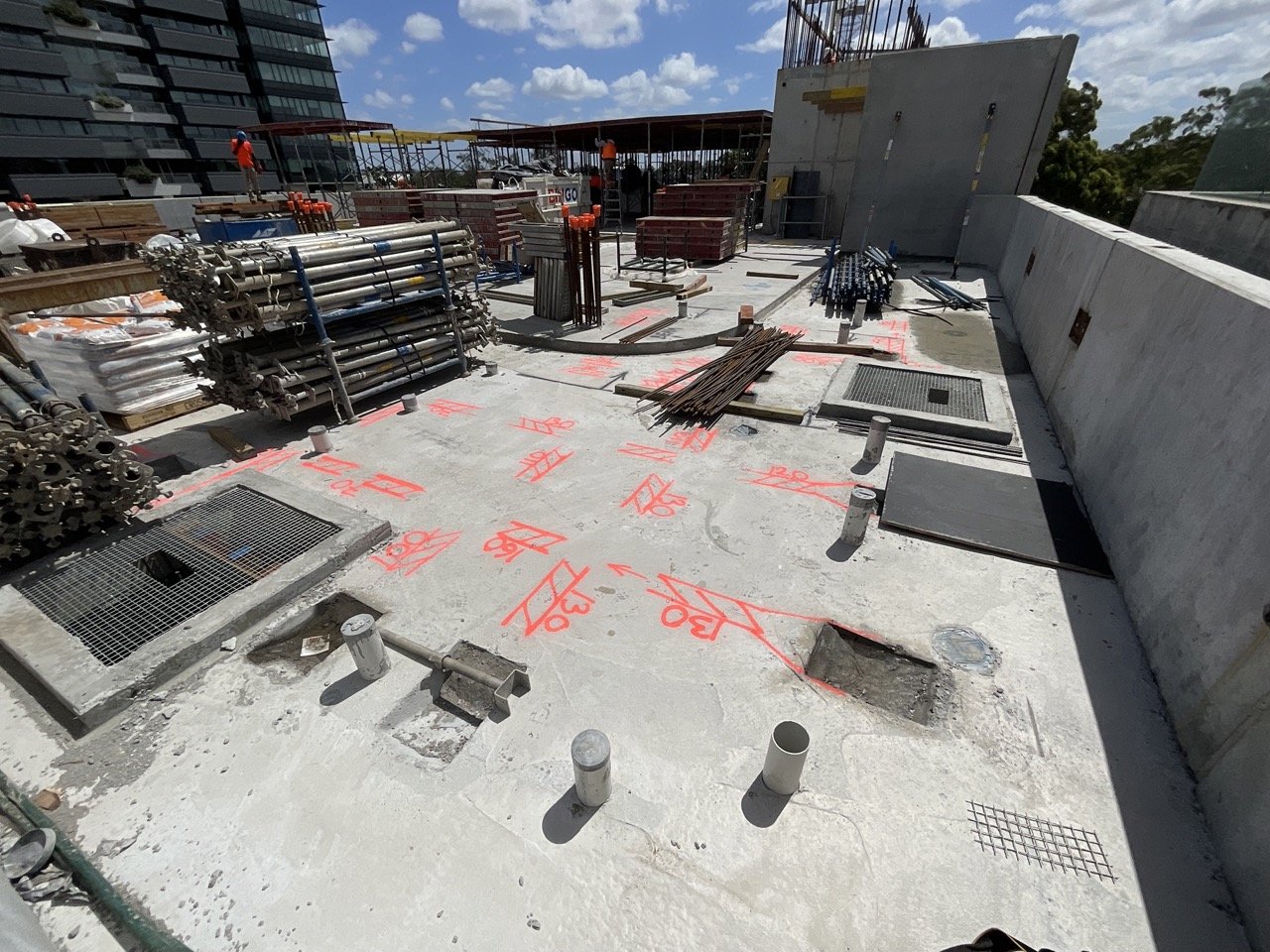
Reinforcement & Post-Tension Cable Layout
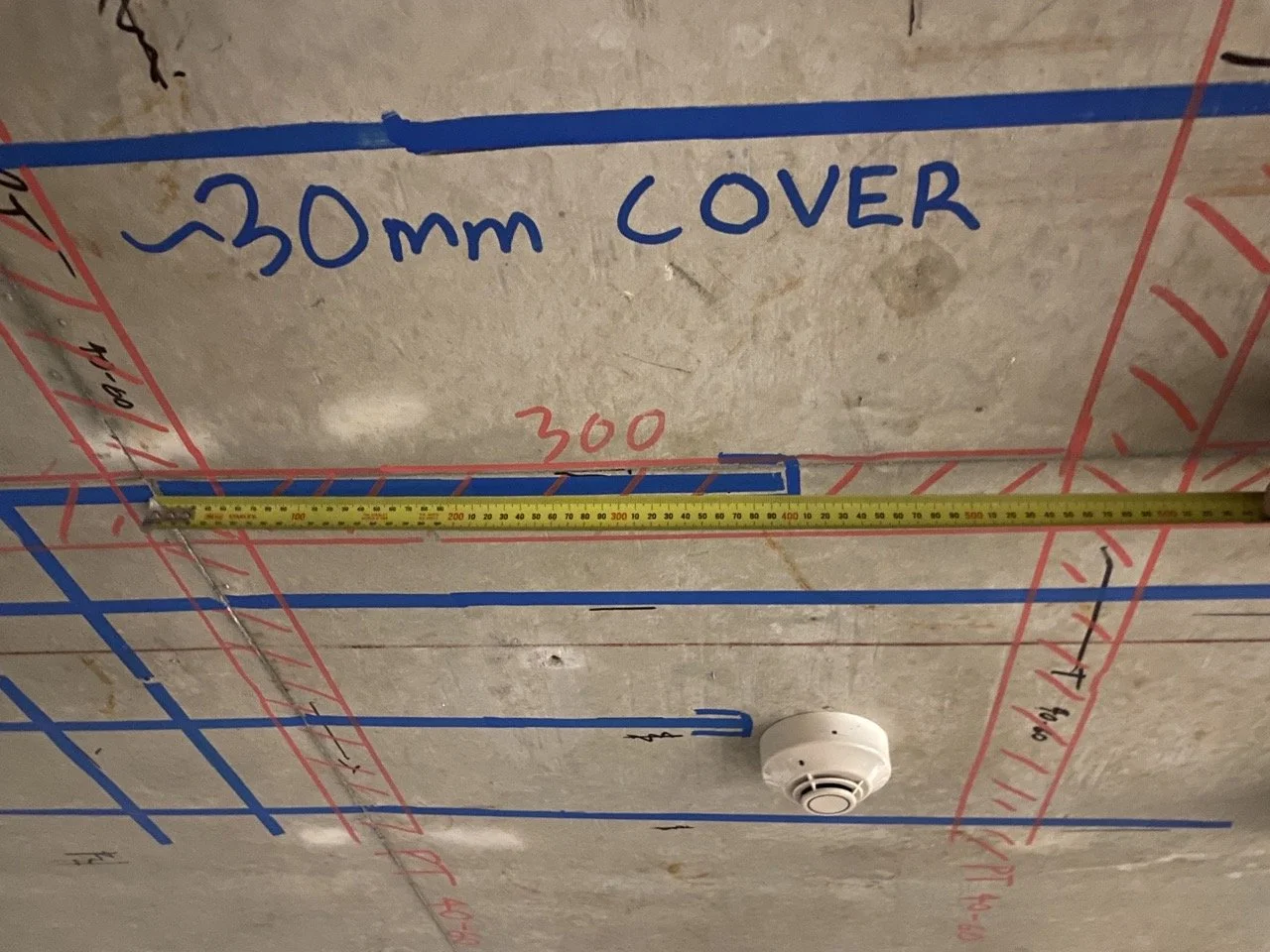
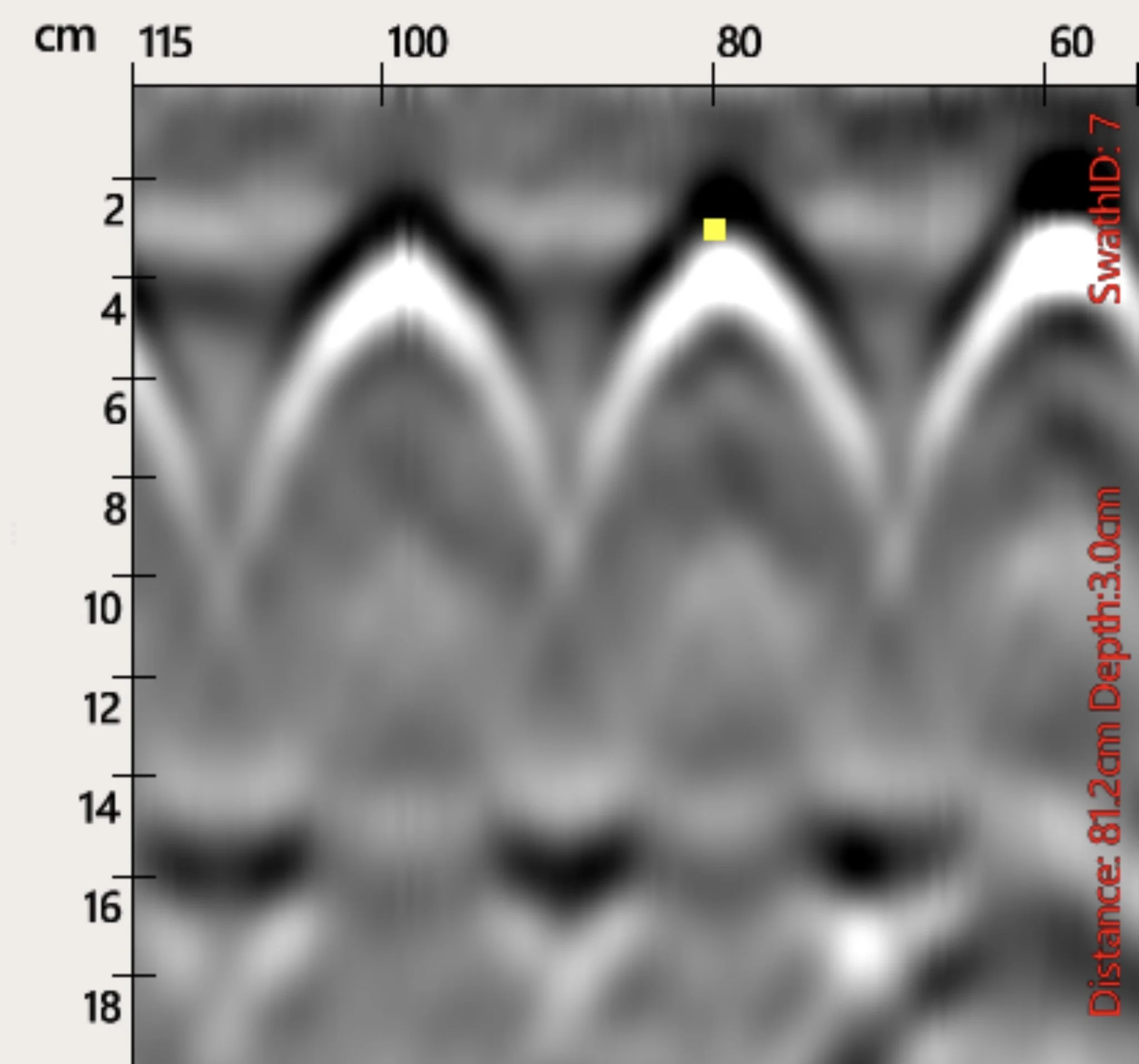
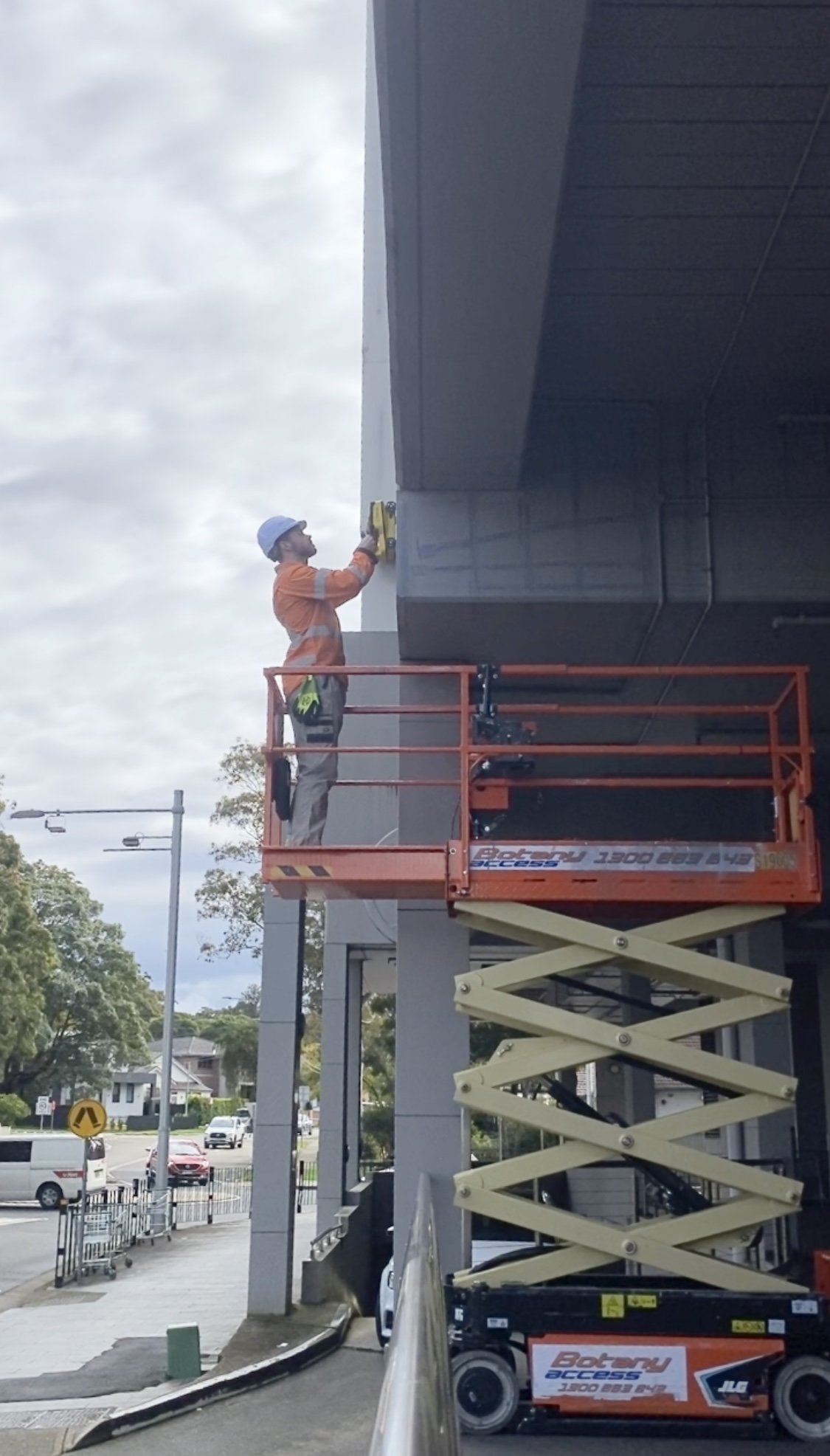
Using Ground Penetrating Radar, ConcreteX maps the full layout of rebar and PT cables inside your structure — marked on-surface in real-time, same day.
Reinforcement & Post-Tension Cable Layout
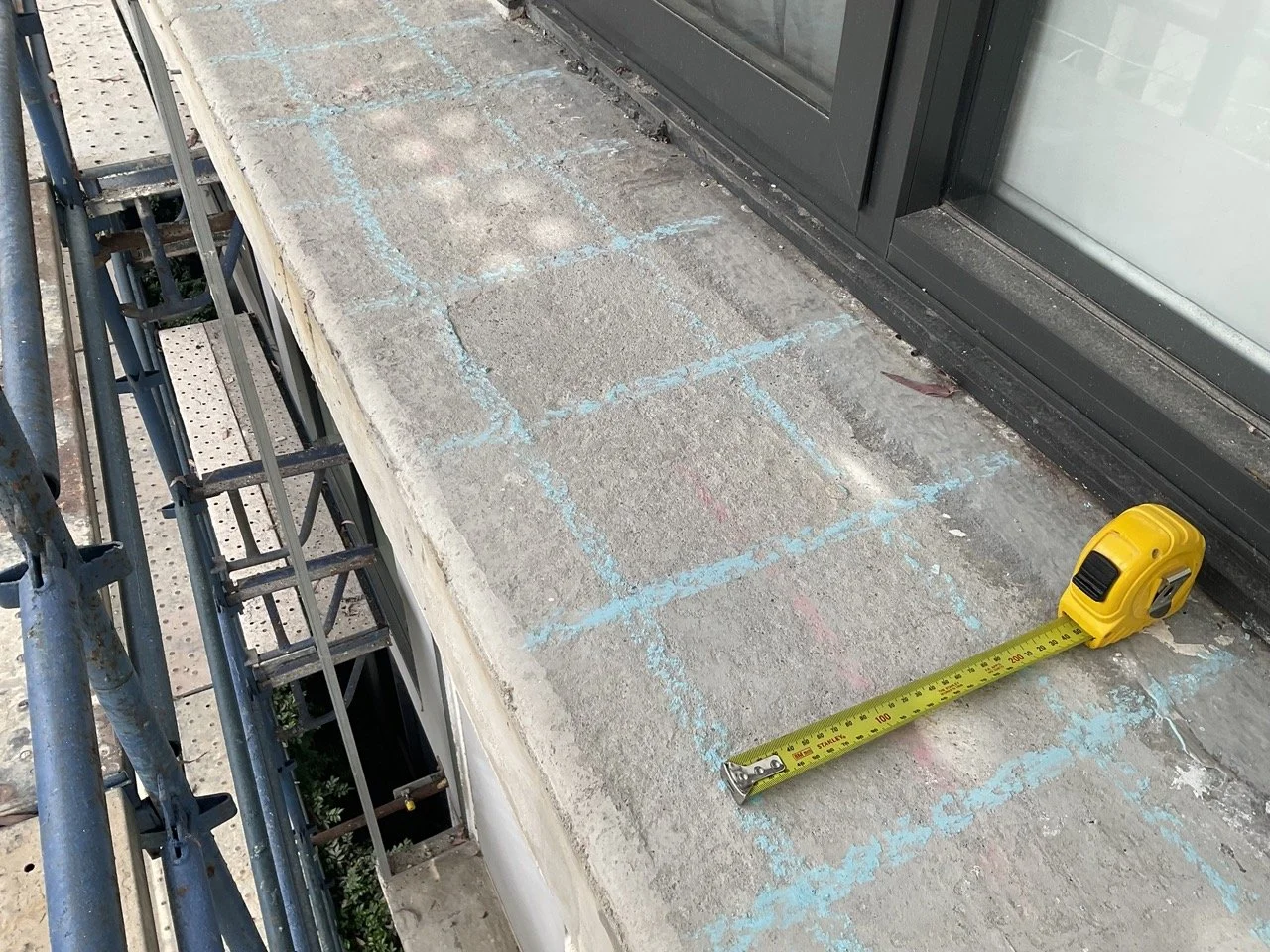
Using Ground Penetrating Radar (GPR), ConcreteX accurately maps the full layout of steel reinforcement and post-tension (PT) cables hidden inside your slab, beam, wall or column — without a single saw cut.
Results are marked directly onto the structure in real-time using spray paint or chalk, giving your team a clear picture of what lies beneath before any drilling, coring or cutting takes place.
- Locating and mapping rebar — spacing, orientation and depth
- Mapping post-tension cable layout and drape profiles
- Identifying PT anchor heads and stressing pockets
- Detecting conduits, voids and other embedded objects
- Suitable for slabs, walls, columns, beams and footings
- On-surface markings & detailed written reports provided
Concrete Cover Measurement
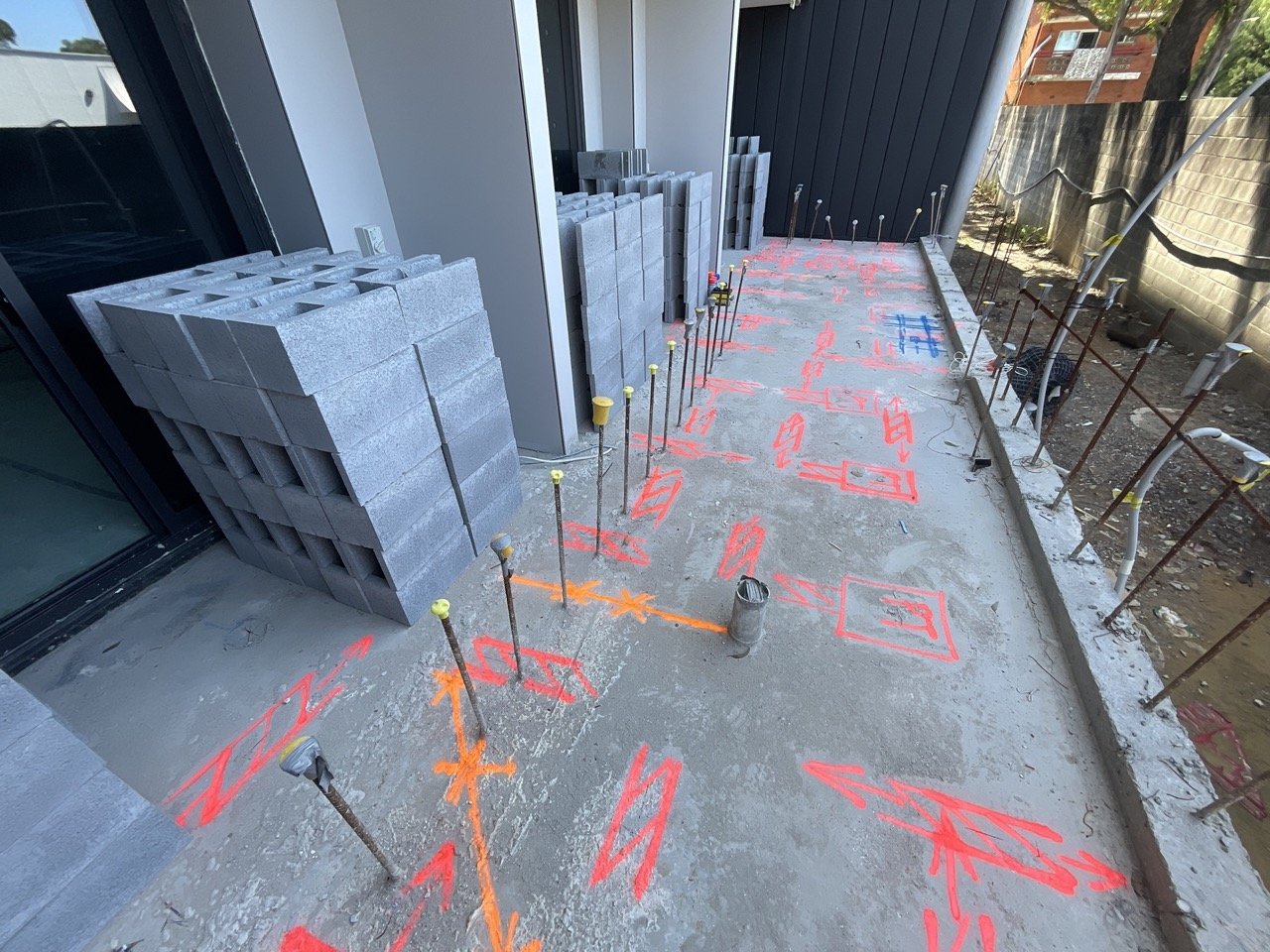
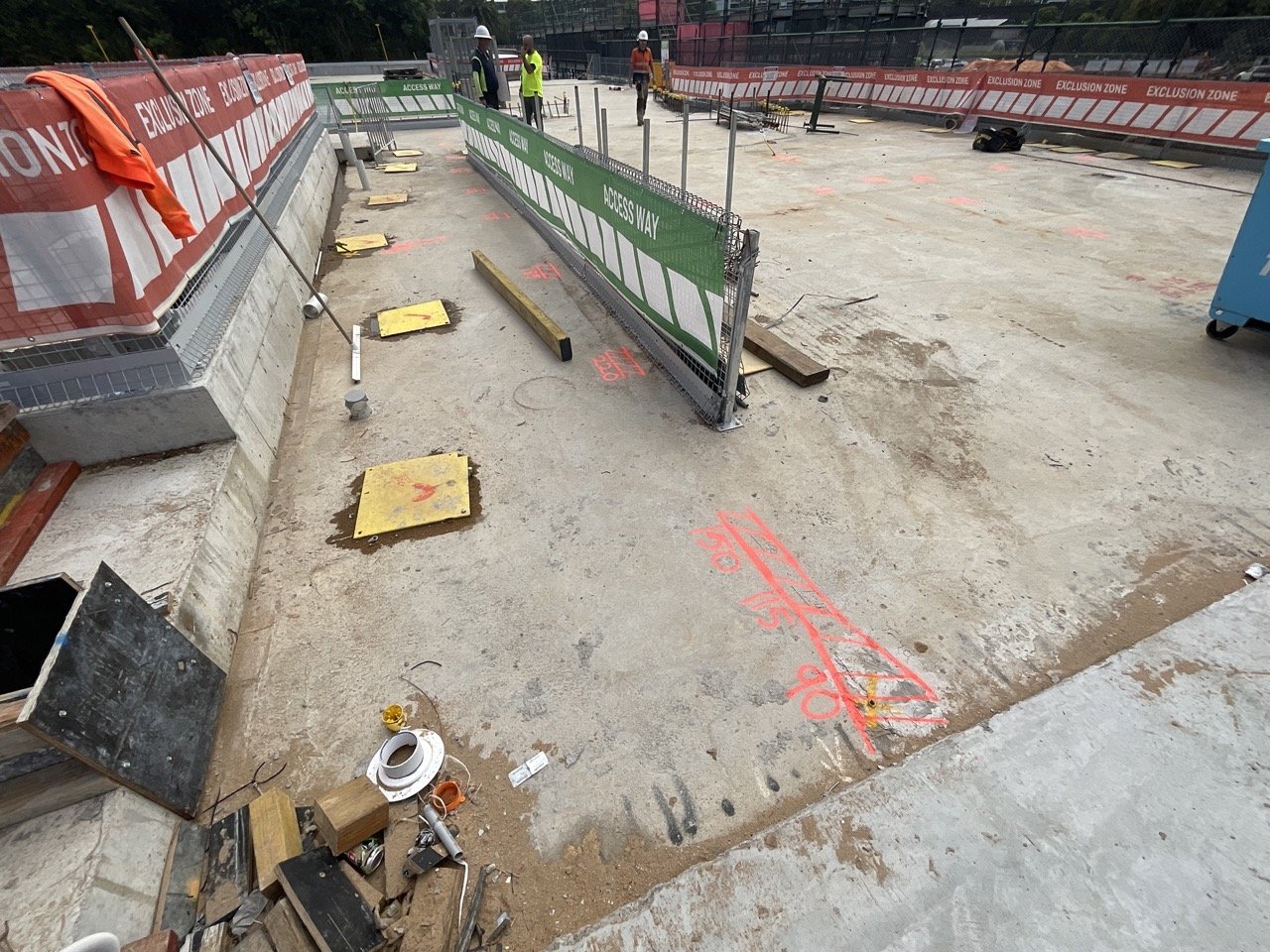
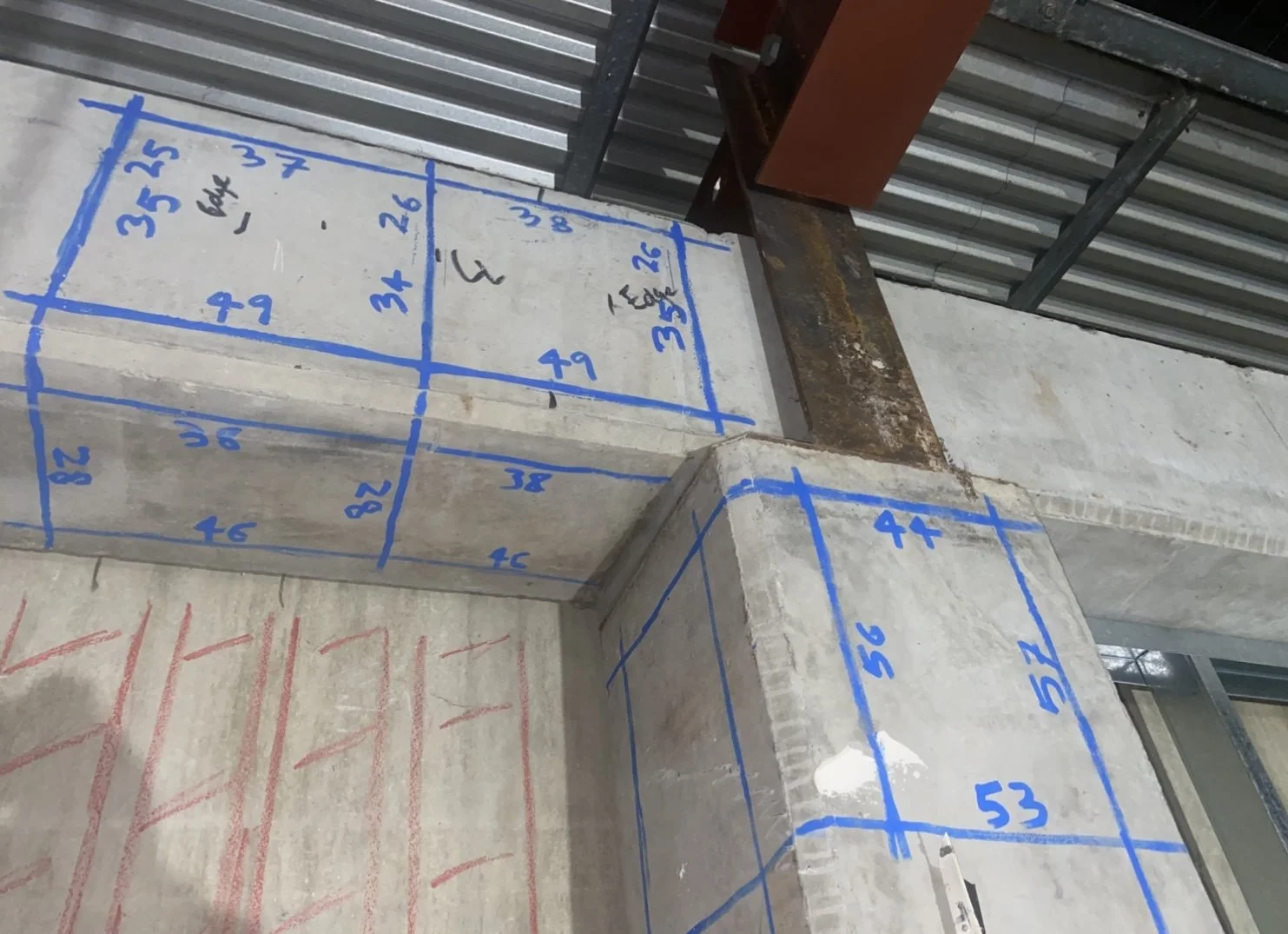
Inadequate cover to reinforcement is one of the most common triggers of concrete deterioration and corrosion damage. We measure cover accurately using Profoscope and GPR across entire structures.
Concrete Cover Measurement
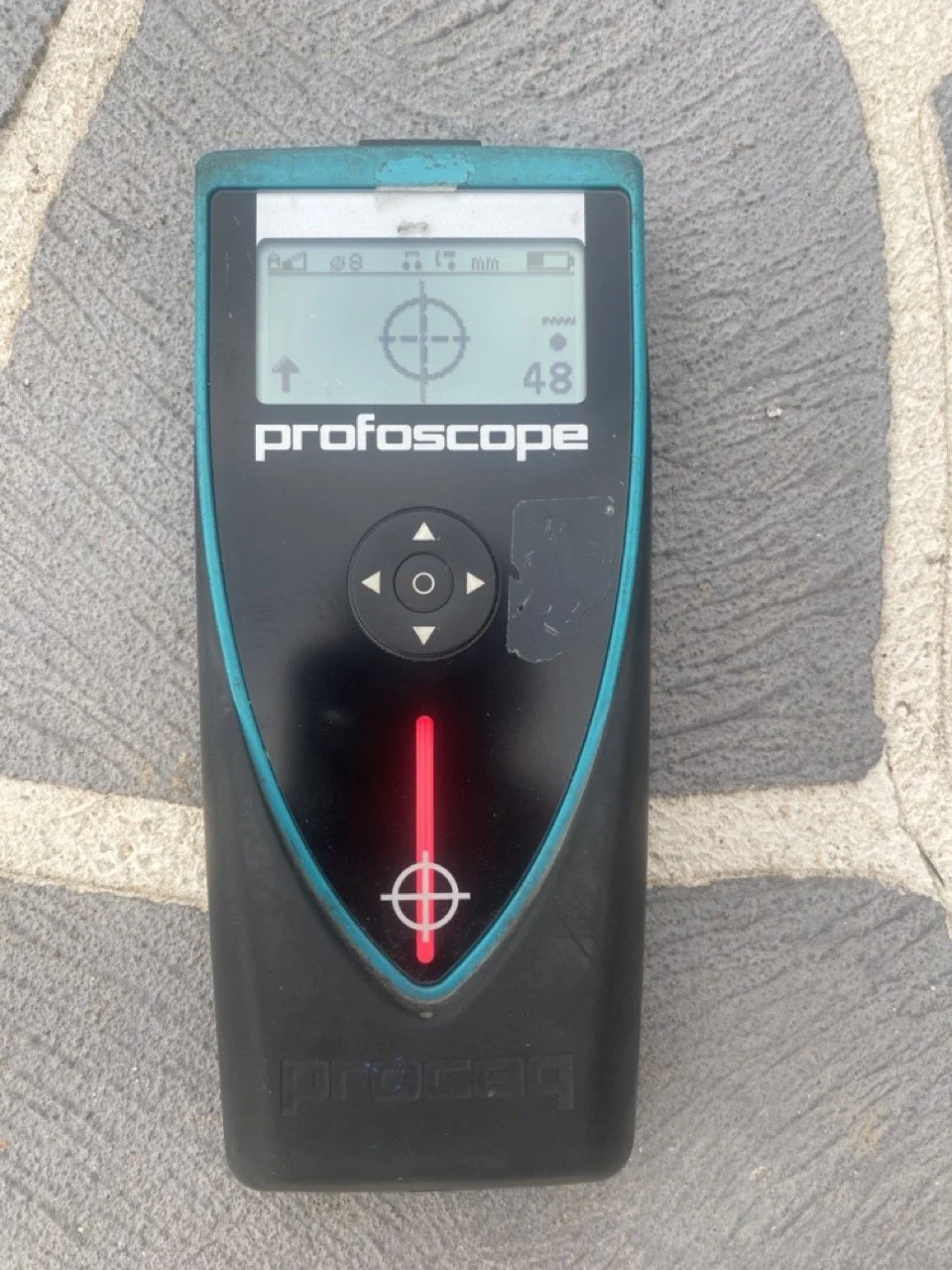
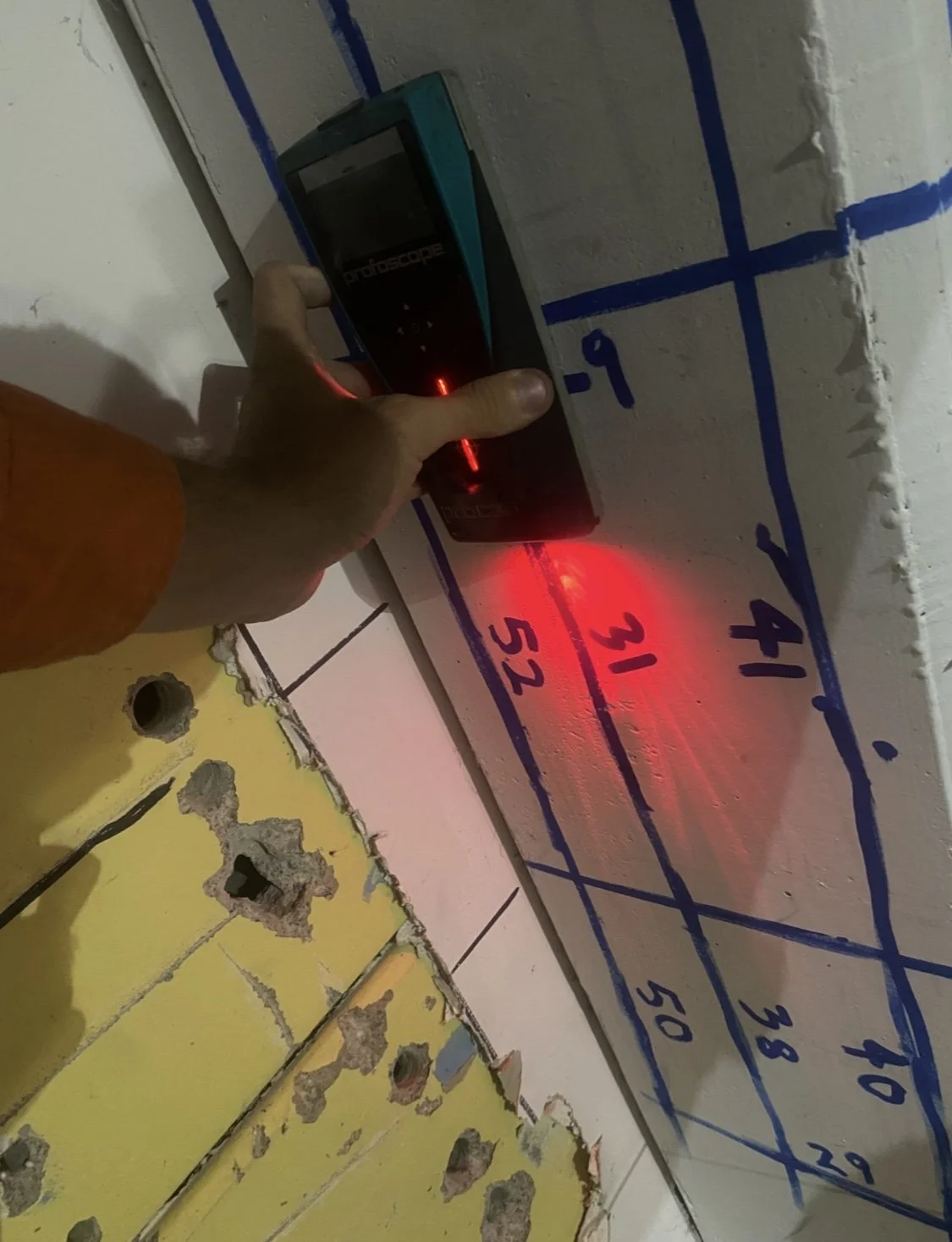
Profoscope (Cover Meter) — A handheld electromagnetic cover meter that measures the depth to reinforcing bars in millimetres. Ideal for systematic grid surveys on walls, columns and soffits.
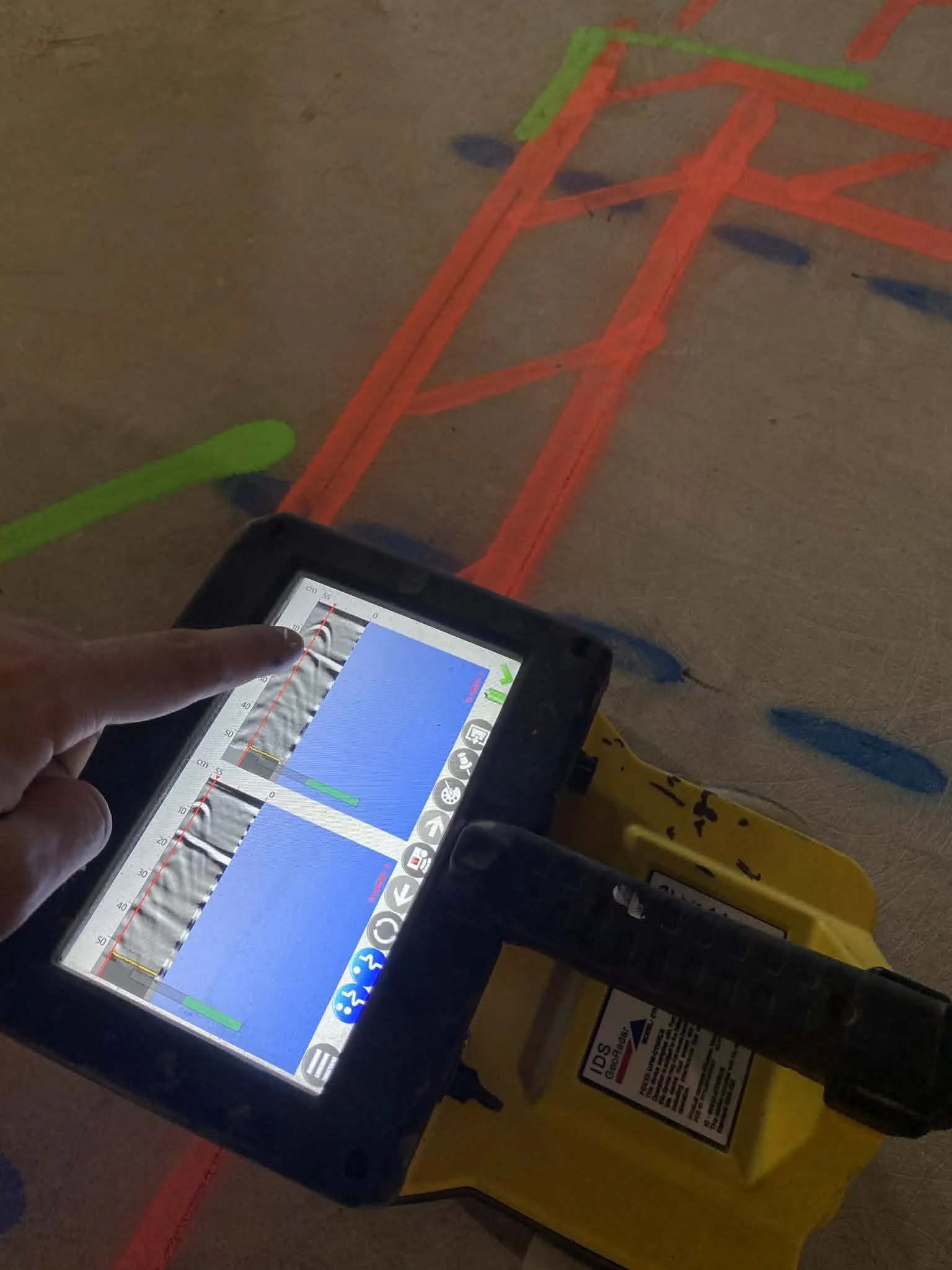
Ground Penetrating Radar (GPR) — Provides cover measurements alongside full reinforcement mapping. Hyperbolic reflections in the radar data are interpreted to give precise depth readings at every scan line.
- Cover surveys across walls, columns, soffits and slabs
- Grid-based mapping with results recorded on structure
- Identifying areas with insufficient or variable cover
- Informing remedial design and repair strategies
- Combined Profoscope + GPR for maximum confidence
- Results presented in a written report with photos
Concrete Depth & Thickness
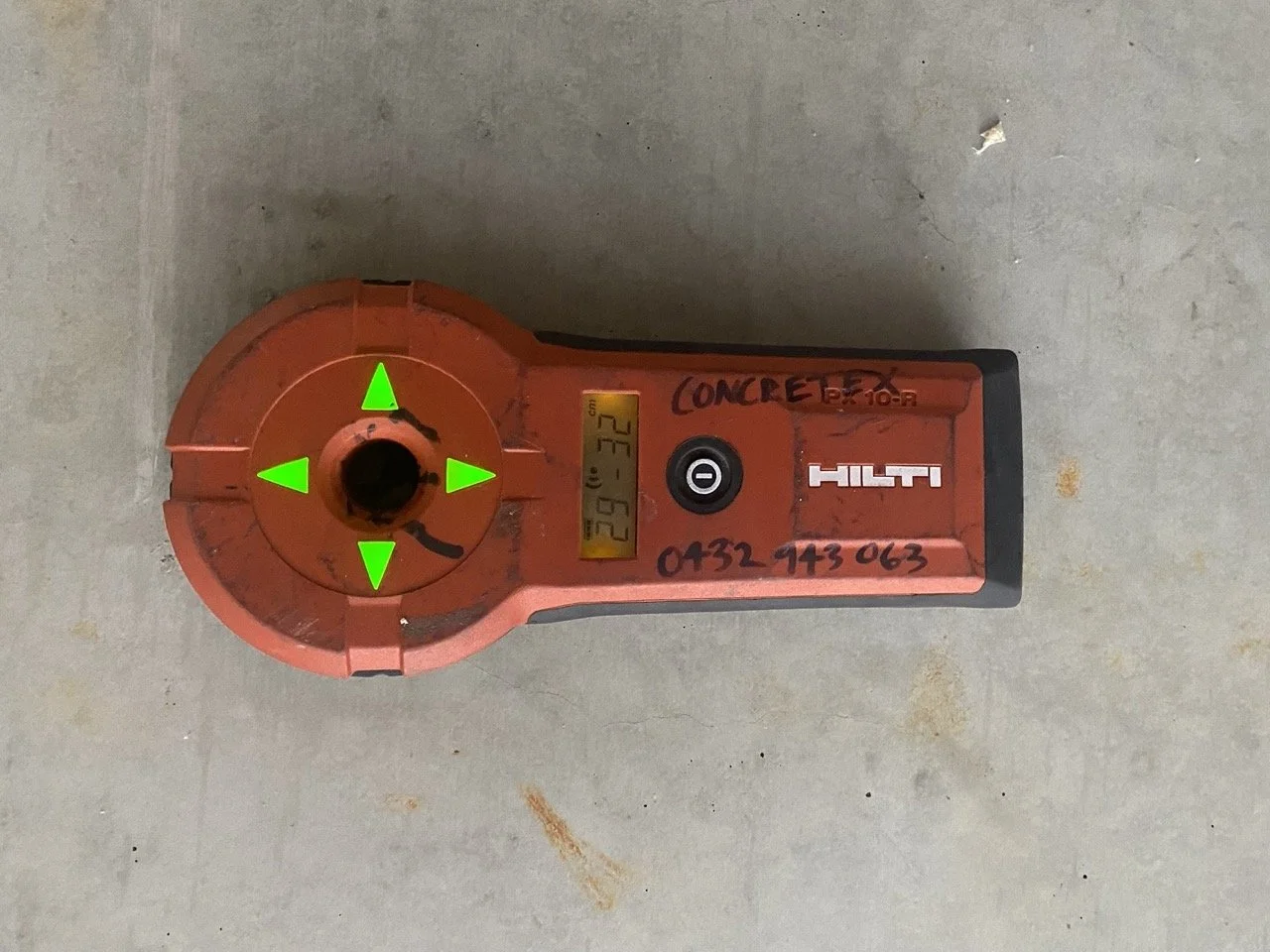
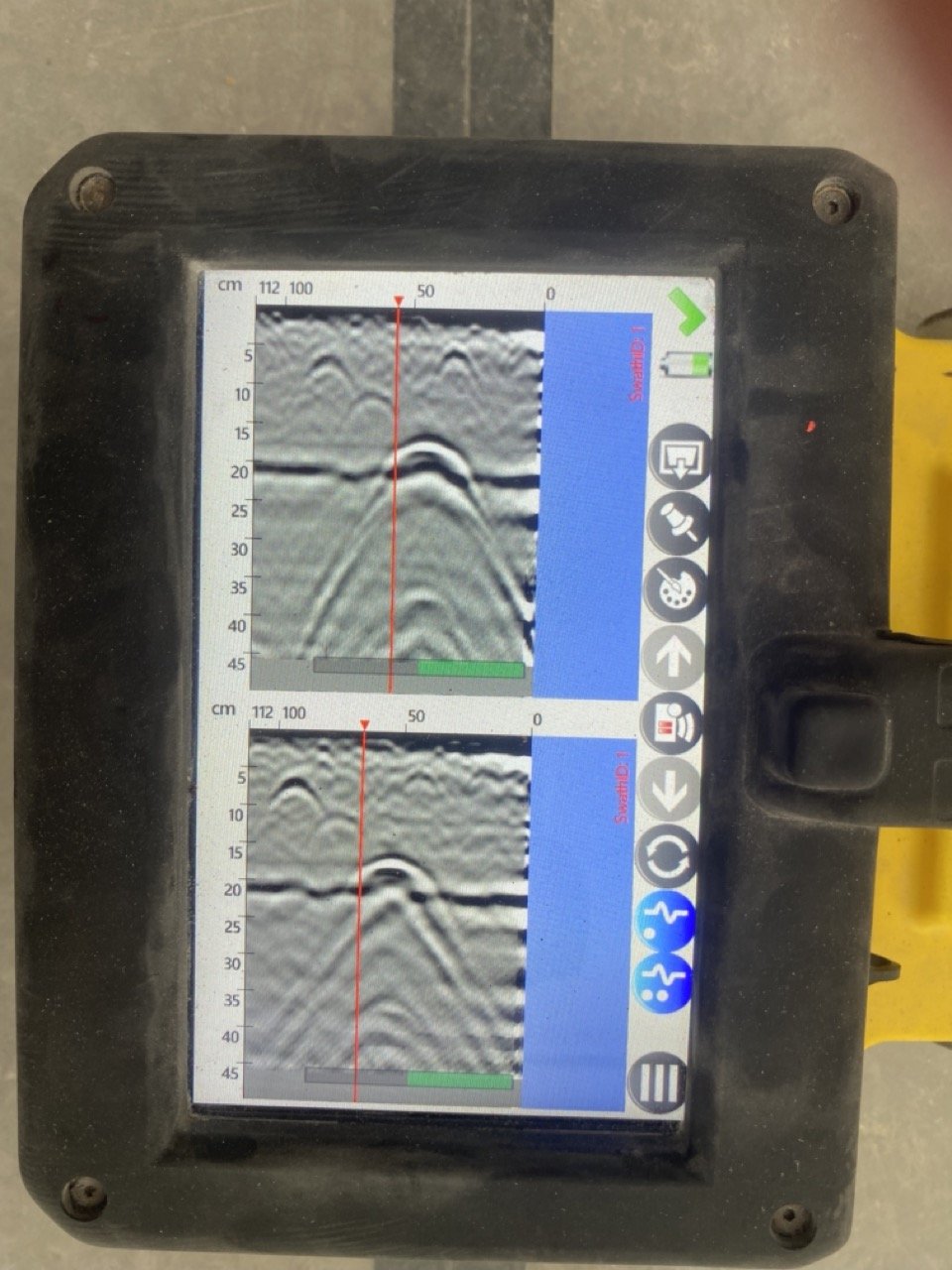
Knowing your slab or element thickness is critical when assessing structural adequacy or verifying as-built construction. ConcreteX determines thickness non-destructively using GPR and Hilti transpointer devices.
Concrete Depth & Thickness
GPR (Ground Penetrating Radar) — The back-wall reflection in radar data reveals overall slab or element thickness, providing continuous depth measurements along the full scan path with no damage to the structure.
Hilti Transpointer — A dedicated depth tool that uses a paired transmitter to signal through the slab, directly confirming concrete thickness at discrete measurement points.
- Slab thickness from one-sided access only
- No core holes required for standard thickness readings
- Validating as-built thickness against design intent
- Can be combined with full GPR scan for maximum data
- Accurate results provided on the same day
Concrete Core Sampling & Lab Testing
Core samples provide the most definitive characterisation of in-situ concrete quality. ConcreteX manages the full process — from GPR scanning to extraction to NATA-accredited laboratory submission.
Concrete Core Sampling & Lab Testing
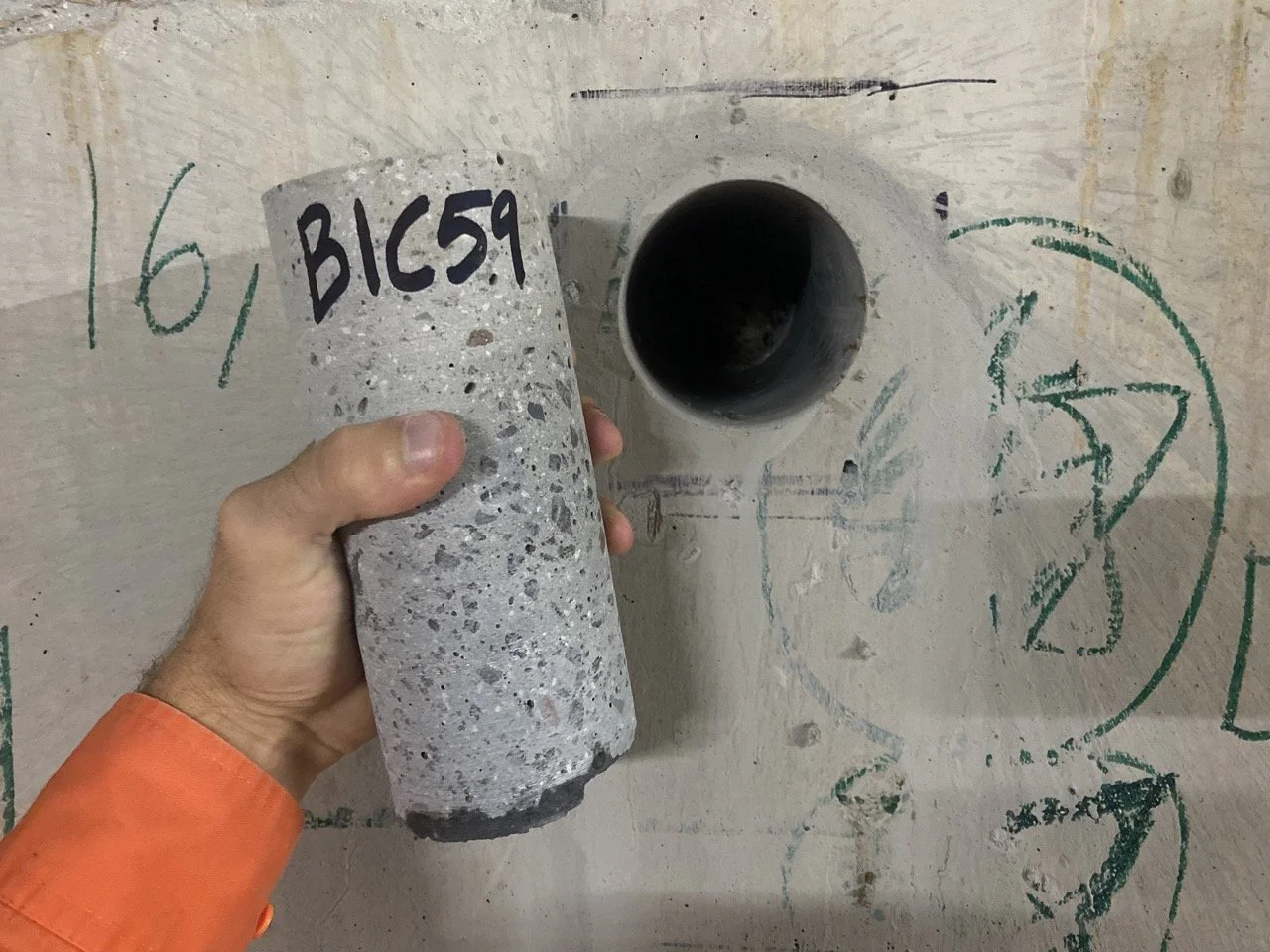
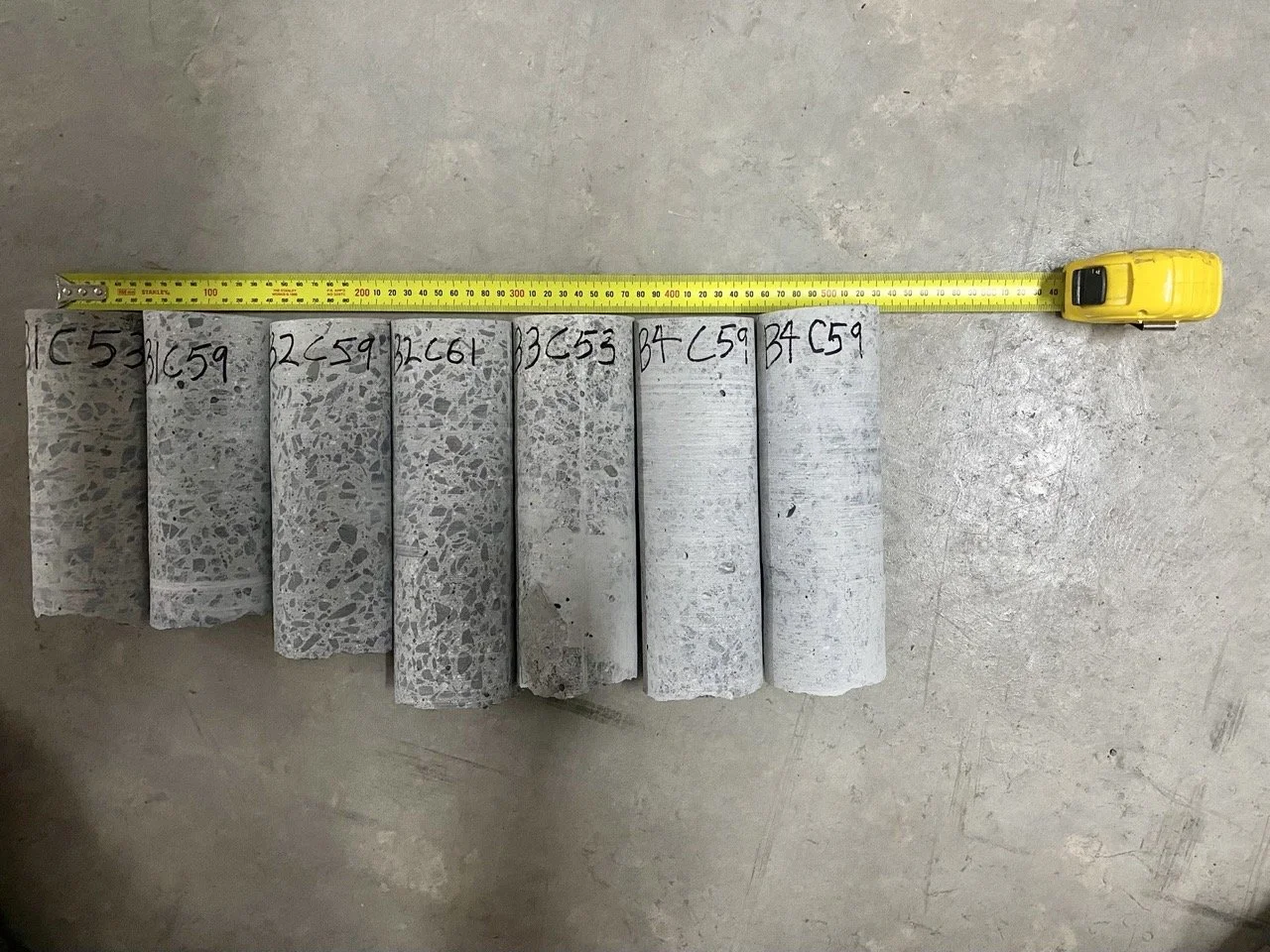
Core samples extracted from your structure are the most definitive method of characterising in-situ concrete. ConcreteX provides end-to-end core sampling — from GPR scanning prior to coring (to avoid hitting reinforcement) through to submission at a NATA-accredited laboratory.
Cores are labelled, photographed and dispatched promptly so your structural engineer or project team receives certified results as quickly as possible.
- Compressive strength testing (MPa) per AS 1012
- Carbonation depth testing (phenolphthalein indicator)
- Petrographic examination of concrete quality
- Chloride content and water-cement ratio analysis
- Cover depth confirmation from extracted core
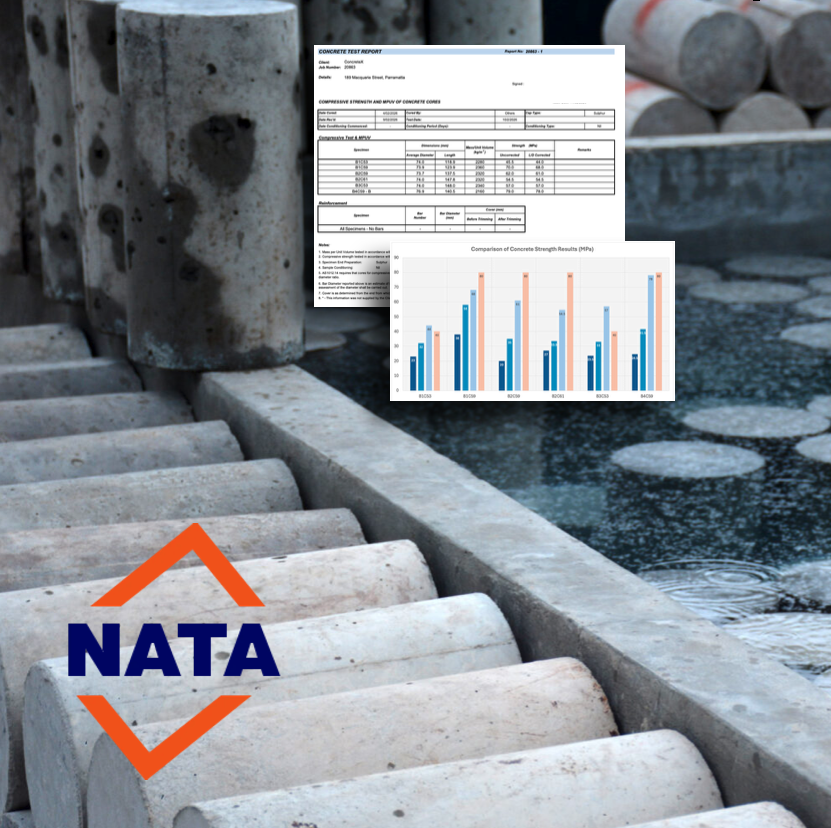
- All results via NATA-accredited certified reports
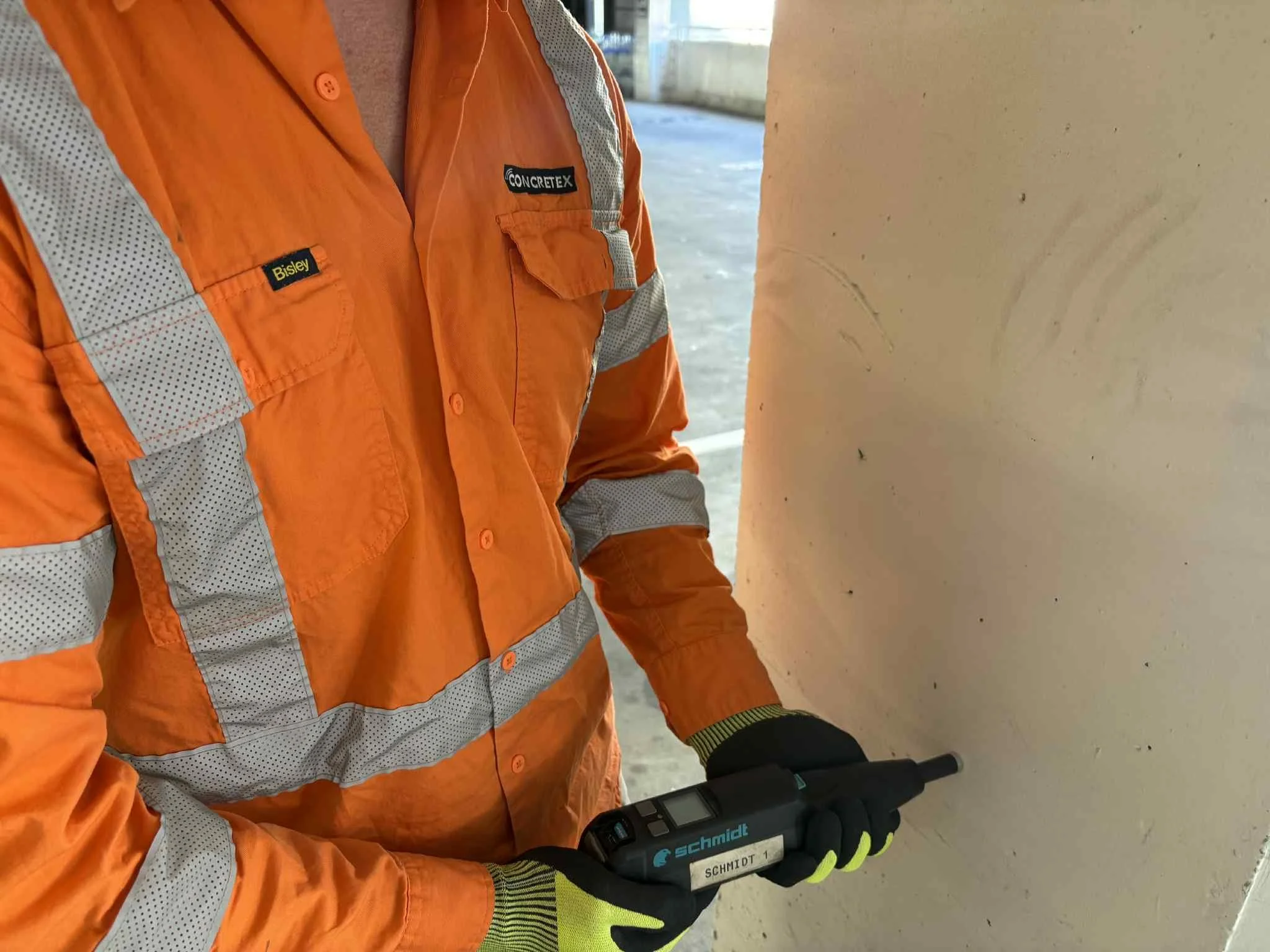
Schmidt Hammer Rebound Testing
A fast, non-destructive method to gain an indication of in-situ concrete compressive strength across multiple test locations in a single visit.
Schmidt Hammer Rebound Testing
The Schmidt Hammer provides a fast, non-destructive indication of in-situ concrete compressive strength. ConcreteX uses digital Schmidt Hammer equipment for accurate, logged readings across many test points in a single site visit.
Ideal as a rapid screening tool to identify areas of concern, compare strength variation across a structure, or to supplement core sample data as part of a broader investigation programme.
- Non-destructive — zero damage to the structure
- Rapid results across many locations in one visit
- Identifies weaker zones for targeted core sampling
- Results correlated to compressive strength (MPa)
- Digital Schmidt Hammer for accurate, logged data
- Suitable for slabs, columns, walls and beams
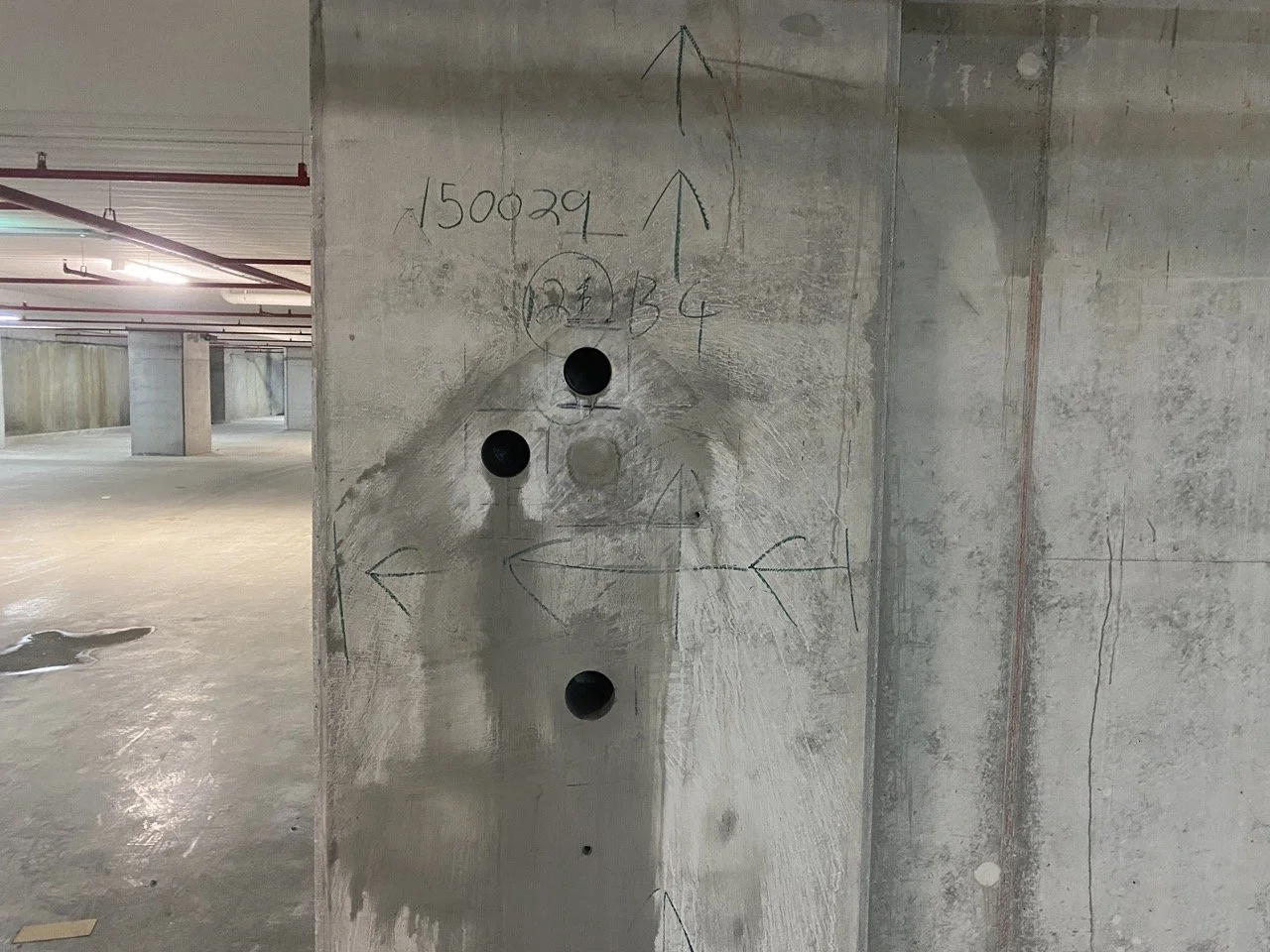
Steel Rebar Size Determination
When drawings are unavailable or bar diameters require physical confirmation, ConcreteX locates target bars via GPR then arranges controlled, localised concrete removal to directly expose and measure the reinforcement.
Steel Rebar Size Determination
When as-built drawings are unavailable and bar diameters need to be physically confirmed, the most reliable method is exposing the bars themselves. ConcreteX locates target bars via GPR scanning first to identify their position, then arranges controlled, localised concrete removal to expose individual bars for direct measurement and visual inspection.
Particularly valuable when a structural engineer requires confirmed bar diameters to complete capacity calculations or repair design.
- Target bars located first via GPR scanning
- Controlled, localised concrete removal to expose bars
- Direct measurement of bar diameter and condition
- Visual assessment for corrosion extent
- Photographs and dimensions recorded in report
- Reinstatement of exposed areas upon request
What Sets
Us Apart
Advanced GPR Technology
We operate industry-leading IDS ground-penetrating radar for maximum resolution — seeing what basic scanners miss, including through congested reinforcement and complex structures.
NATA-Accredited Results
All concrete core testing is processed through NATA-accredited laboratories, providing certified and legally defensible results your structural engineer can rely on.
Detailed Reporting
Every investigation is supported by a comprehensive written report with photographs, findings and structured data your engineer can use directly in their assessment.
Fast Turnaround
Rapid mobilisation across Sydney. On-site markings provided same day so your project doesn’t lose momentum waiting on results.
Fully Insured & Certified
ConcreteX holds full public liability insurance and all operators are certified, site-inducted and work safely and compliantly on every project.
Trusted by Industry
From remedial builders to tier-1 contractors and structural engineers — ConcreteX is Sydney’s trusted concrete investigation partner.
Built for the
Professionals
Who Build
Engineers & Consultants
Structural engineers, building consultants and civil engineers requiring precise, certified data to inform assessments, capacity calculations and repair design.
Remedial Builders
Remedial contractors needing a clear picture of the existing structure before commencing concrete repair, waterproofing or facade remediation works.
Builders & Contractors
General builders and specialist contractors who need to understand what’s inside a slab or wall before drilling, coring, cutting or fixing into concrete.
Facility & Asset Managers
Facility managers, strata managers, asset owners and property developers carrying out due diligence, condition assessments or planned maintenance programmes.
Ready to Investigate
Your Structure?
Talk to our team today — we’ll recommend the right suite of tests for your project and provide a fast, no-obligation quote.